
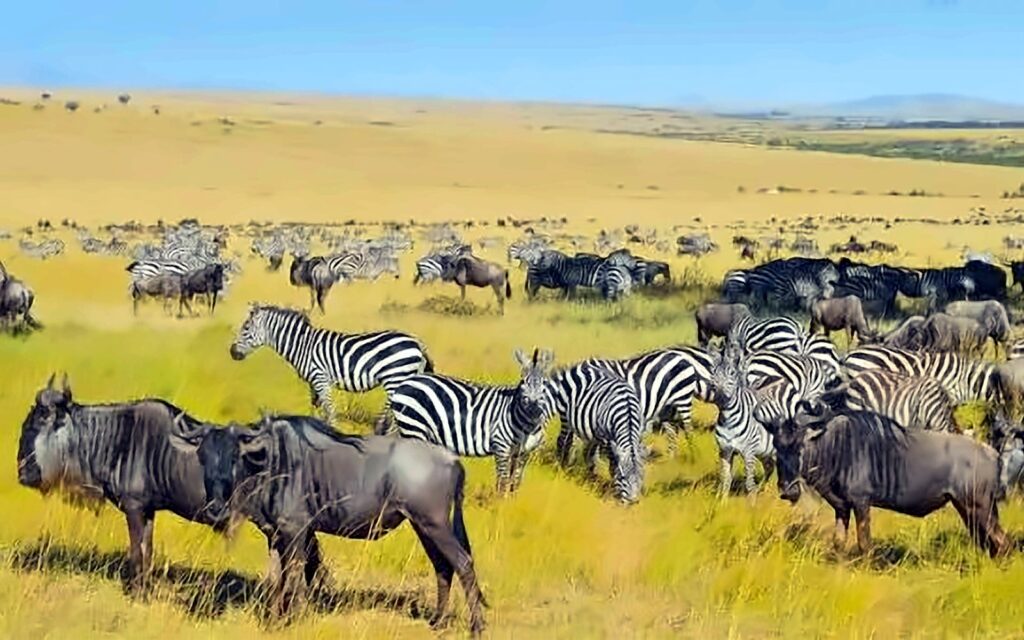
The Serengeti is Tanzania’s most famous national park and the heart of the Great Migration, when more than a million wildebeest, along with zebra and gazelle, follow the rains in a continuous cycle. It is a vast ecosystem of plains, kopjes and woodland, and the wildlife viewing is outstanding in every season.
The Serengeti migration, season by season
- January to March: calving season on the short-grass plains around Ndutu in the south. Thousands of calves are born in a few weeks, and predators are close behind.
- April to June: the herds move north-west through the central and western Serengeti.
- July to October: dramatic crossings of the Mara River in the northern Serengeti.
- November to December: the herds return south as the short rains begin.
Other wildlife
The Serengeti has a large population of lion, plus leopard, cheetah, elephant, giraffe, hippo and crocodile. Hot-air balloon safaris are an optional extra in the central Serengeti.
Getting to the Serengeti
Most itineraries start in Arusha and combine the Serengeti with Ngorongoro Crater and Tarangire. You can also arrive from the Masai Mara in Kenya on a combined trip.